The outdoors starts at the front door here. Within a few minutes of Glade Court you can be on a towpath watching a heron, pushing a swing in the park, or walking under trees on a path that feels much further from home than it really is. The routes themselves barely change between January and December, but what you get from them does. What follows is a season-by-season guide to where to go, when to set off, and what to have with you.
Spring: Blossom, Birdsong and a Bit of Mud
April and May are when the canal towpath earns its reputation. The hedge along the water comes into leaf before almost anything else, moorhens and mallards are busy with young, and the light on the water at seven in the morning is worth setting an alarm for. Walk early if you want birdsong; leave it until mid-morning and you will mostly hear bicycle bells.
The woodland is the other spring highlight. Bluebells usually appear from mid-April into early May, and the display is best where the trees are oldest and the canopy is still thin. Stay on the main path through the bluebell areas. Trampling compacts the soil and damages the bulbs, and a patch that gets walked through will thin out over the following years. Digging up wild bluebells is also illegal in the UK, whatever the garden centre might suggest.
Then there is the mud, which is the real story of a British spring. Paths are often wetter now than in winter, because the ground is thawing and holding water rather than draining. Expect the towpath to have puddles across its full width after a night of rain, and expect the wooded slope to be genuinely slippery. Waterproof shoes with a decent tread are enough; full boots are overkill unless it has been a wet week.
Summer: Early Starts and Shade
The rule is simple: go early or go late. Between eleven and four, the towpath has long stretches with no shade at all, and much of the open parkland is the same. Before nine, the paths belong to dog walkers and runners. After seven, the light turns golden and the air cools quickly, which makes an evening loop far more appealing than a lunchtime one.
Shade, water and keeping cool
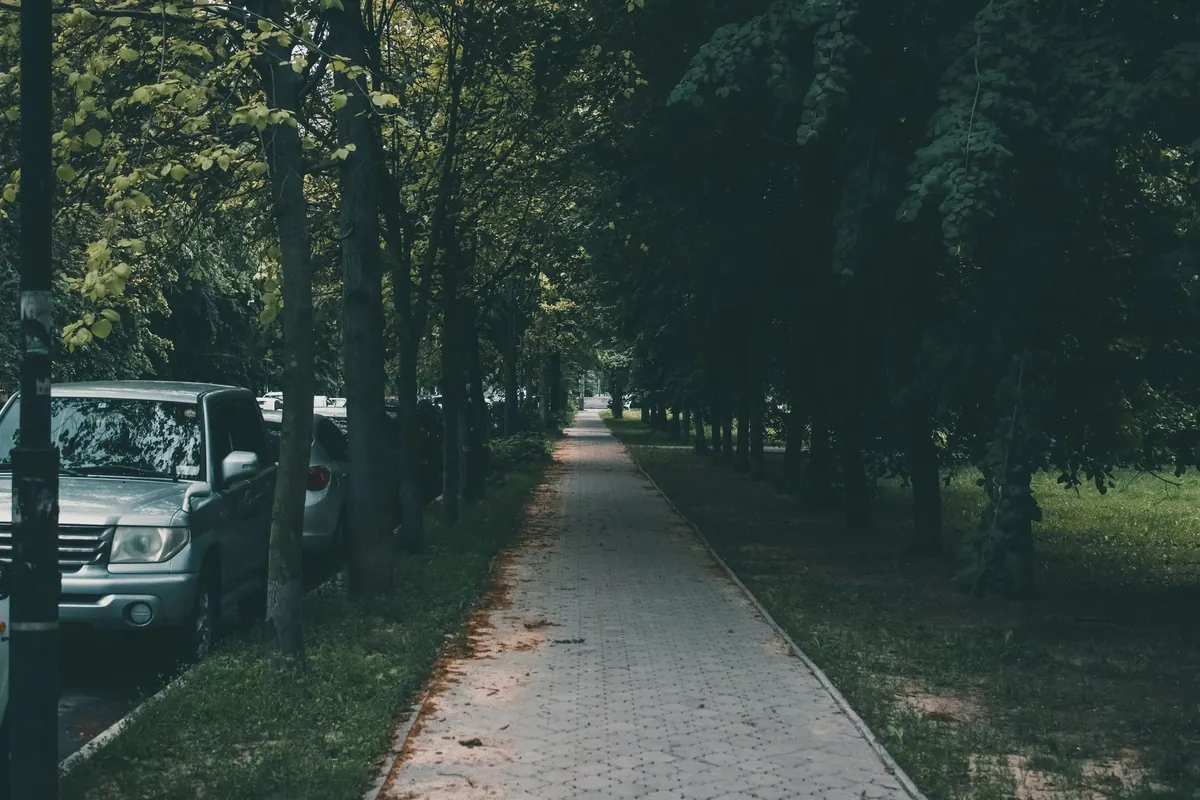
Plan a route that keeps trees between you and the sun: the wood, the tree-lined avenue on the park's northern edge, the stretch of canal where the bank is thick with willows. Take more water than you think you need, for the dog as well as for yourself, and a hat makes a bigger difference than most people expect.
The canal looks tempting on a hot afternoon, particularly to children and dogs, but it is not a swimming spot. The water is colder than it appears, the edges are often steep and the bottom uneven. On still, hot days, blue-green algae can form a green scum on the surface, and it can be harmful to dogs that swim through it or drink it. If you see it, keep the dog on the lead and report it to the canal authority.
Autumn: Colour, Conkers and Slippery Leaves
September and October are the best walking months of the year here. The air is cool but the ground is usually still dry, the towpath is quieter than in summer, and the woods put on a proper show of colour. It is a good time to attempt the longer loop you have been putting off since spring.
Leaf fall is the thing to plan around. Wet leaves on stone edging, lock gates, wooden bridges and steps turn genuinely greasy, and a surprising number of minor injuries happen on flat-looking paths rather than steep ones. Shorten your stride on descents and take the handrail where there is one.
Conkers, acorns and sweet chestnuts are all worth collecting with children, though sweet chestnuts need the prickly casing removed before anyone gets too excited. Leave fungi alone. Some of the most attractive species growing on a stump or a lawn are also among the most poisonous, and there is no reliable shortcut for identifying them.
Winter: Frost, Floods and Empty Paths
Winter empties the paths, and that is the pleasure of it. With the leaves gone you can see the shape of the area properly: the line of the old field boundary, the way the canal curves, the roofs on the far side of the park. On a clear, cold morning the views are better than at any other time of year.
Two things to check before you set off
The first is flooding. Towpaths and riverside meadows flood after heavy rain, and floodwater on a canal path is not something to wade through, however shallow it looks. You cannot see whether the edge has been scoured away or whether there is a hole beneath the surface. Check local flood warnings, and if the route is under water, use the street route instead.
The second is ice. Bridges, lock gates, steps and wooden boardwalks freeze before the surrounding ground does, so a path that feels fine can turn dangerous for twenty metres. Go slowly, hold the rail, and turn back if the surface is glazed rather than merely frosty. Wear a layer you can remove once you warm up, and take a flask. A short loop with several chances to cut back early beats one long circuit when the light is fading by half past four.
What to Carry, Whatever the Season
- A packable waterproof jacket, even on a bright forecast
- Shoes with grip, kept for walking rather than gardening
- Water, and a bowl or bottle for the dog
- A small torch or head torch from October to March
- A charged phone with an offline map saved
- Plasters for the blister that always arrives at the furthest point
- Dog bags, and a spare, because one is never enough
Making It a Habit
The simplest way to use these routes more often is to attach them to something you already do: a walk to the shop by way of the park, ten minutes along the towpath before work, a Sunday loop that ends at a café. Keep one short route and one longer one ready in your head, so a change in the weather or an unexpected hour of free time does not mean staying in.
Practical habits help too. Go out against the traffic of the day, which usually means mornings on the towpath and afternoons in the wood. Greet people, give cyclists room on the shared stretches, and keep dogs on leads around nesting birds in spring and near the water in summer. If you are returning to longer walks after a break, or you have a heart, lung or joint condition, it is worth a word with your GP before building up the distance. Otherwise, pick a season, pick a direction, and go.
Photo: Eugene Shirokov / Pexels